Gluten-Free Outdoor Travel Meals for Texas Adventures
Planning gluten-free meals for Texas outdoor trips doesn’t mean sacrificing flavor or convenience. Whether you’re camping in Big Bend National Park, hiking in the Hill Country, or setting up near the Gulf Coast, smart preparation keeps you energized without worrying about cross-contact.
From foil packet dinners cooked over coals to freeze-dried backpacking meals and make-ahead Texas barbecue proteins, there are practical ways to eat well outdoors while staying gluten-free.
Adapting Gluten-Free Meals to Texas Regions: Desert vs. Gulf Coast
Texas climates vary dramatically, and your food storage strategy should reflect where you’re traveling.
West Texas & Desert Regions (Big Bend, Guadalupe Mountains)
Dry heat dominates West Texas, often exceeding 100°F in summer. While low humidity slows bacterial growth slightly compared to humid regions, extreme heat still accelerates food spoilage.
Key considerations:
- Use insulated coolers with block ice rather than loose cubes.
- Store protein at the bottom of the cooler where temperatures remain coldest.
- Minimize opening the cooler frequently.
- Pack shelf-stable gluten-free snacks such as nut butter packets, certified bars, rice cakes, and tuna pouches.
Freeze-dried gluten-free meals perform especially well in desert environments due to their long shelf stability.
Gulf Coast & East Texas (Galveston, Padre Island, Piney Woods)
Humidity significantly increases spoilage risk. Moist air, warm nights, and coastal exposure require tighter food management.
Key considerations:
- Double-seal proteins in airtight containers.
- Use thermometer-equipped coolers to ensure temperatures remain below 40°F.
- Consume perishable gluten-free meats within 24–48 hours.
- Avoid leaving packaged gluten-free bread exposed to humid air to prevent mold.
Adjusting storage methods based on region improves both safety and food quality.
Foil Packet Gluten-Free Meals for Campfire Cooking
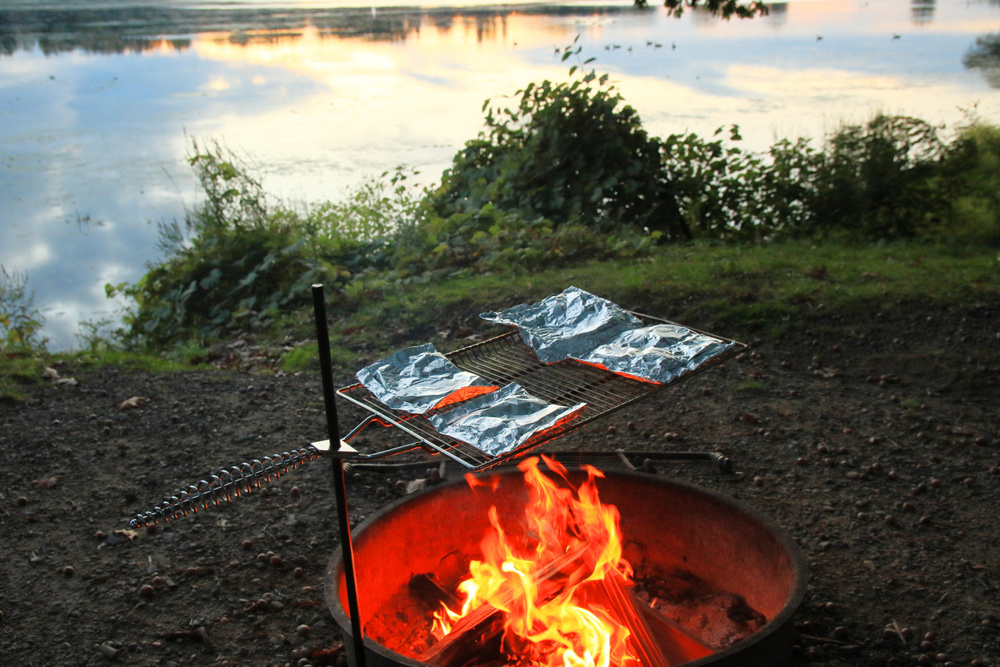
Foil packet cooking remains one of the simplest and most reliable campfire methods. Using heavy-duty aluminum foil in double layers helps protect ingredients from direct flames.
Place sealed packets over a grill grate or a bed of glowing coals rather than open flames. Most combinations cook in 15–25 minutes, depending on thickness. Rotate halfway through to ensure even heating.
Reliable gluten-free combinations include:
- Southwest breakfast hash with potatoes, sausage, and peppers
- BBQ chicken with sweet potatoes and black beans (using certified gluten-free sauce)
- Shrimp, zucchini, and corn with olive oil and seasoning
For dessert, sliced bananas with dark chocolate chips wrapped in foil offer an easy treat. Including high-moisture vegetables like tomatoes or mushrooms prevents proteins from drying out.
Always confirm packaged sauces and spice blends are labeled gluten-free before packing.
Gluten-Free Grilled Kebabs Ready in 20 Minutes
Grilled kebabs are ideal for quick Texas campsite dinners. Cut proteins into evenly sized pieces—about 1 to 1½ inches—to ensure even cooking.
Preheat your grill to medium-high heat (approximately 400°F). Chicken typically cooks in 10–12 minutes, turning every few minutes. Ground beef or lamb kebabs seasoned with cumin, paprika, garlic, and parsley also cook quickly and require no marinade.
Thread vegetables such as bell peppers, onions, and zucchini between protein pieces. Leave small gaps between ingredients for proper airflow and even browning.
Metal skewers are convenient and reusable, while wooden skewers require soaking beforehand to prevent burning.
Freeze-Dried Gluten-Free Meals for Backpacking Trips
For backcountry trips where refrigeration isn’t possible, certified gluten-free freeze-dried meals are practical and lightweight.
Brands that clearly label gluten-free options include:
- Mountain House (select certified gluten-free meals)
- Backpacker’s Pantry (labeled gluten-free varieties)
- Good To-Go (many meals made without gluten-containing ingredients)
- Wild Zora (grain-free and paleo-style meals)
Options range from rice-based curries to taco bowls and protein-heavy entrées. Always check current packaging for certification or allergen statements, as product lines evolve.
Freeze-dried meals require only boiling water and eliminate cross-contact concerns common at shared campsites.
Pulled Pork, Brisket, and Other Gluten-Free Proteins to Make Ahead
Texas barbecue translates well into outdoor meal prep.
Pulled pork and brisket can be cooked in advance, cooled properly, and vacuum-sealed or stored in airtight containers for transport. Most smoked meats are naturally gluten-free, but seasoning blends and sauces should always be verified.
Proper storage guidelines:
- Refrigerated: 3–4 days
- Kept in an insulated cooler with ice packs: consume within 24–48 hours
Reheat gently in a cast iron skillet or foil packet over coals. Add gluten-free BBQ sauce after reheating for best texture and flavor control.
Grilled chicken thighs and sausages labeled gluten-free also travel well and reheat easily.
Cooler Packing Guide for Texas Heat
Texas summer heat demands strategic cooler packing to keep gluten-free foods safe.
Follow this structure:
- Pre-chill your cooler overnight before loading.
- Layer block ice or frozen water bottles at the bottom.
- Place sealed raw or cooked proteins directly above the ice.
- Add a second ice layer if possible.
- Store snacks and sealed packaged foods at the top.
Keep the cooler in shaded areas and avoid storing it in direct sunlight.
For multi-day trips, consider bringing two coolers—one for beverages and one strictly for food. This reduces repeated opening and helps maintain safe temperatures.
Use a thermometer to ensure internal cooler temperatures remain at or below 40°F, the recommended safe food storage threshold.
Gluten-Free Breakfast Hash, Oatmeal, and Morning Skillets
Mornings at camp call for quick, energy-dense meals.
A cast iron breakfast hash made with diced potatoes, onions, peppers, and gluten-free sausage provides a hearty start. Crack eggs into wells in the skillet or scramble directly into the mixture.
Certified gluten-free oats can be prepared as hot oatmeal or prepped as overnight oats before your trip. Always choose oats labeled gluten-free, as conventional oats are often cross-contaminated.
For a faster option, assemble breakfast bowls with pre-cooked rice, scrambled eggs, and avocado.
When using fresh chorizo, remove the casing before cooking so the meat crumbles evenly into your skillet.
Hydration and Electrolyte Planning for Texas Heat
Triple-digit temperatures are common across much of Texas from late spring through early fall. Proper hydration is as important as meal planning.
Guidelines for outdoor activity:
- Drink water consistently rather than waiting for thirst.
- Pair water with electrolyte replacements during extended exertion.
- Use gluten-free electrolyte powders or tablets (verify labeling).
- Avoid relying solely on sugary sports drinks.
Signs of dehydration include fatigue, dizziness, headache, and muscle cramps. In hot environments, electrolyte imbalance can occur even when drinking water alone.
Plan for at least ½ to 1 liter of water per hour of moderate activity in extreme heat, adjusting for body size and exertion level.
Gluten-Free Campfire Sides: Cornbread, Loaded Potatoes, and Chili
Sides complete a campsite meal without adding complexity.
Gluten-free cornbread can be baked in a cast iron skillet using certified gluten-free flour blends combined with cornmeal, baking powder, eggs, and milk (or dairy-free substitutes). Bake over coals with a lid for 20–30 minutes until golden.
Instead of loaded fries—which require careful oil control—consider loaded baked potatoes wrapped in foil and cooked in coals. Top with cheese, bacon, and chives.
Bean-based chili thickened naturally (without flour) remains gluten-free when all ingredients are verified. Simmer slowly in a Dutch oven over low heat for best results.
Gluten-Free Dining at Texas State Park Concession Stands
Some larger Texas state parks and recreation areas operate seasonal concession stands or small camp stores. Offerings vary widely and may include burgers, hot dogs, packaged snacks, or ice cream.
Because most concession stands use shared preparation surfaces and fryers, gluten-free safety cannot be guaranteed.
If planning to purchase food onsite:
- Ask whether items are prepared on shared grills or in shared fryers.
- Choose packaged snacks with clear gluten-free labeling when possible.
- Avoid fried foods unless dedicated fryers are confirmed.
In remote parks such as Big Bend Ranch State Park or Palo Duro Canyon, dining options may be limited or unavailable. Bringing sufficient gluten-free meals remains the safest approach.